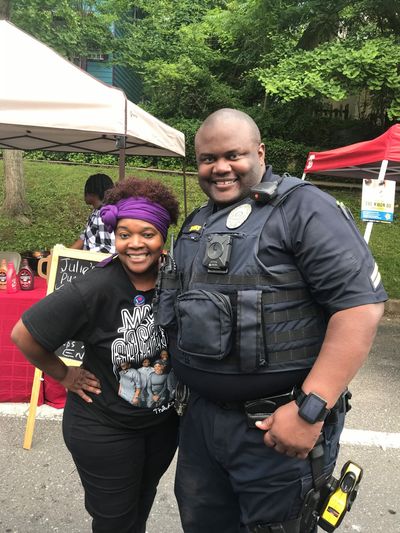
PACS community standing together after a training session
The origin and the framework

A program born from the gap between practice and reality.

Personal Awareness Combative Strategies (PACS) was built on a clear realisation: traditional martial arts often leave a gap between studio practice and real-world survival. We exist to close it.

PACS was established to provide a more holistic approach to safety that goes beyond throwing a punch. The founder's martial arts journey began in 1985 across Goju Shorin, Jaka-do, and Tae Kwon Do, and the specialised PACS framework has been refined over years of military service and professional law enforcement work since 2013.

It serves as a bridge between the discipline of traditional systems and the unpredictable nature of modern security threats. Three decades of training in studios, followed by two careers in environments where awareness, restraint, and decisiveness all decide outcomes.

What makes PACS different

Three pillars. One framework. No fluff.

01 Awareness priority

Read the vibe. Walk away first.

Most schools focus on the combative side. PACS prioritises Personal Awareness. We teach that the best way to win a fight is to recognise the vibe of an environment and de-escalate or avoid the situation entirely before anything turns physical.

02 Stress-tested realism

Built for 180 bpm.

Drawing from law enforcement and military backgrounds, the curriculum is stripped of fluff. We focus on movement economy and decision-making under pressure, ensuring that what you learn works when your heart rate is at 180 bpm and your fine motor skills are gone.

03 Adaptive curriculum

A combative ecosystem.

Rather than adhering to a rigid, one-size-fits-all style, PACS integrates multiple systems to create a combative ecosystem. This allows students to develop a personal safety strategy that fits their specific physical abilities, body type, and lifestyle.

Who runs PACS
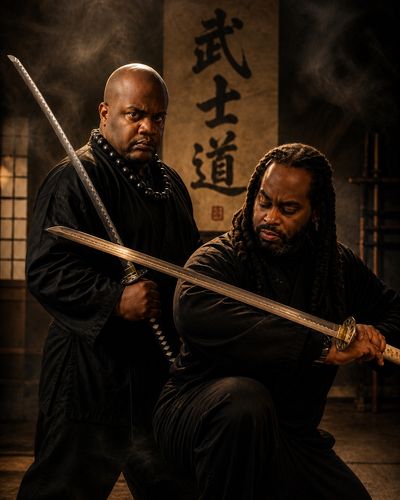
Paul Simms and Justin Gibson, PACS co-founders

Paul Simms and Justin Gibson, co-founders

Paul Simms

Co-founder · veteran · law enforcement · multi-discipline instructor

Paul started his martial arts journey in 1985 in Goju Shorin, later adding Jaka-do and Tae Kwon Do. The specialised PACS framework was developed during years of professional law enforcement work since 2013 and across his prior military service.

What he saw on the job, in the briefing room, and on the mat, was that the gap between studio practice and the way real situations unfold is wider than most schools admit. PACS is his answer to that gap.

On the mat since
1985
In LEO/military since
Pre-2013
Primary systems
Goju Shorin · Jaka-do · Tae Kwon Do
Specialty
Awareness · stress-tested realism

Justin Gibson

Co-founder · Special Police Officer · multi-discipline instructor

Justin brings over sixteen years across law enforcement, security, and private investigations to the PACS curriculum. As a Special Police Officer, his expertise in close-quarters control and defensive tactics is practical and battle-tested, drawn from the work, not the textbook.

His martial arts journey began in 1990 and spans more than three decades in Goju-Ryu, Jaka-Do, Aiki Jujitsu, and Tae Kwon Do. Recognising how often practitioners struggle to carry controlled dojo training into unpredictable, high-stress encounters, he developed Kensho Jujitsu: a system built around timing, positioning, and maximum effectiveness with minimal effort.

At PACS he bridges the gap between the training mat and the real world, for civilians and security professionals alike. One principle drives the teaching: adaptation is key.
On the mat since
1990
In LEO/security
16+ years
Primary systems
Goju-Ryu · Jaka-Do · Aiki Jujitsu · Tae Kwon Do
Founder of
Kensho Jujitsu
What we believe

The principles the curriculum is built on.

  • Principle 01

    Awareness is the first weapon.

    If you can read the situation, the physical response is often never required. Awareness is the foundation, not the supplement.

  • Principle 02

    Your body shapes your strategy.

    Technique only matters if it works for your body. We build the strategy around your size, your strength, your mobility, not a textbook.

  • Principle 03

    Fine motor skills disappear under stress.

    Any technique that requires fine motor control under pressure is a technique that fails under pressure. We train the gross-motor patterns that survive.

  • Principle 04

    The room is part of the curriculum.

    Decision-making is a habit, not a class. We teach you to keep awareness alive in parking lots, hallways, transit, and at home, not just on the mat.

  • Principle 05

    Trauma-informed by default.

    We don't make you re-enact anything you don't want to. Survivors and their families set the pace, the scope, and the format.

Find out what PACS would look like for you.

30-minute consultation. No commitment. Either way you'll walk out reading the room differently.

Book the consultation →